U.S. Army Launches Next-Generation Unmanned Ground Vehicle Development Program
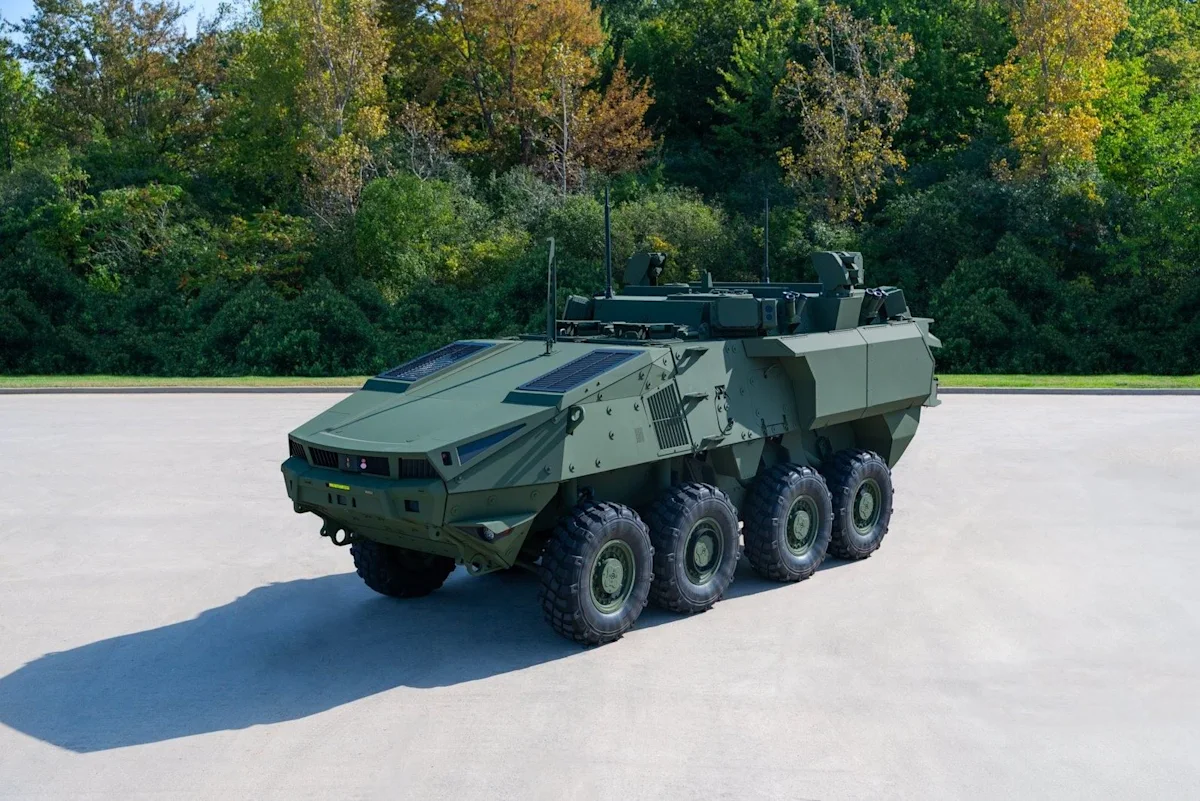
The U.S. Army signed an 18-month contract with American Rheinmetall in early August to develop a new unmanned ground vehicle (UGV) based on an extended-range hybrid platform from California-based startup Harbinger. This initiative is part of the Army’s Project Sustainment, aimed at mitigating risks to logistics convoys from drones and precision strikes by leveraging autonomous driving technology to minimize soldier exposure in high-risk environments.
As the prime contractor, American Rheinmetall will integrate Harbinger’s hybrid platform, Forterra’s autonomous driving software, and Primordial Labs’ Anura human-machine interface system. While Harbinger’s platform is classified as a plug-in hybrid, its operational mode closely resembles an extended-range electric vehicle (EREV). The gasoline engine primarily recharges the battery or supplies power directly rather than driving the wheels.
Hybrid Platform Delivers Long Range and High Power Output
Harbinger’s Praesidia vehicle platform serves as the core of this UGV development, offering robust power output capabilities. The platform includes a gasoline engine with 48 kW of continuous output and a 15 kW onboard inverter, combined with a high-voltage battery pack. This configuration enables a peak power output of 350 kW, sufficient to support external equipment. With a full tank and fully charged battery, the platform achieves a total range exceeding 500 miles (approximately 805 kilometers), including about 105 miles (169 kilometers) in all-electric mode.
Harbinger provides three military platform wheelbase options: 158 inches (approximately 4 meters), 178 inches (approximately 4.5 meters), and 208 inches (approximately 5.3 meters). The gross vehicle weight rating ranges from 16,000 to 26,000 pounds (approximately 7.3 to 11.8 metric tons), with a maximum payload capacity of 18,000 pounds (approximately 8.2 metric tons). The platform utilizes drive-by-wire technology, allowing third-party equipment installation without concerns over driving control, simplifying the integration process.
Autonomous Driving and Voice-Control Technologies Enhance Operational Flexibility
Forterra’s autonomous driving software will enable the UGV to navigate and perform missions with minimal human intervention, while Primordial Labs’ Anura interface system converts natural-language voice commands into vehicle inputs, further reducing operational complexity. The integration of these technologies is expected to enhance the safety and efficiency of U.S. Army logistics operations while demonstrating the potential of extended-range hybrid technology in military applications.
The contract was facilitated by the National Advanced Mobility Consortium (NAMC), a collaboration between government and defense industry partners aimed at accelerating the development and funding of experimental vehicle technologies. American Rheinmetall has not yet specified which wheelbase will be used for the final UGV but emphasized that the platform’s modular design can accommodate diverse mission requirements. This program is expected to bring transformative changes to U.S. Army logistics and lay the foundation for future unmanned ground vehicle development.