Volkswagen Group to Halve Model Lineup by 2030, Discontinuing Key Audi and Porsche EVs

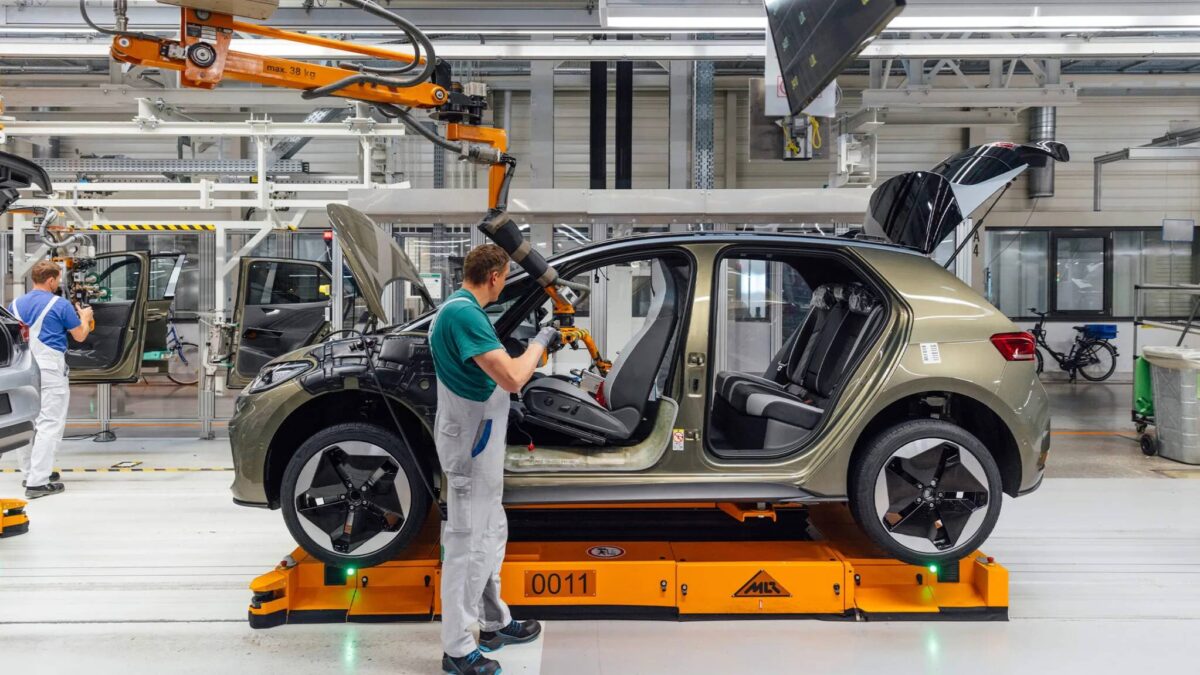
Volkswagen Group has announced plans to reduce its global vehicle lineup by up to 50% by 2030, with reports indicating the discontinuation of 10 models, including the electric Porsche Taycan and Audi Q6 E-Tron Sportback, as part of a broader restructuring effort.

Editorial Team7/15/2026Updated 7/15/2026
Volkswagen Group to Halve Model Lineup by 2030, Discontinuing Key Audi and Porsche EVs

Volkswagen Group has confirmed a sweeping overhaul of its product strategy, announcing last week that it will reduce its global vehicle lineup by as much as 50% by 2030. The move is part of a broader cost-cutting initiative that includes eliminating up to 100,000 jobs worldwide. While the company has not released an official list of models slated for discontinuation, reports from German newspaper Bild, later cited by Motor1, identify 10 vehicles that may be phased out in the coming years.

Models Reportedly Facing Discontinuation

Among the vehicles reportedly marked for elimination are several long-standing models from Volkswagen’s core brand. The Jetta sedan and Taos SUV, both of which have seen declining sales in key markets like the U.S., are said to be on the chopping block. The Jetta, once a cornerstone of Volkswagen’s lineup, has not received a fully electric successor, leaving it increasingly outpaced by competitors such as Tesla, Toyota, and Kia. The Taos, introduced as a compact SUV, has similarly struggled to maintain relevance amid shifting consumer preferences toward larger or electrified vehicles.

The Volkswagen ID.5, an electric SUV coupe sold in Europe and the UK, has also been the subject of speculation regarding its future. While not explicitly named in Bild’s report, industry observers have questioned its long-term viability due to modest sales figures and the brand’s focus on higher-volume electric models like the ID.3 and ID.4.

Premium Brands Porsche and Audi Affected

The reported cuts extend to Volkswagen’s premium brands, with Porsche and Audi both facing the discontinuation of multiple models. According to Bild, the gas-powered Porsche 718 Boxster and 718 Cayman will not receive next-generation updates, effectively ending their production runs. The electric Porsche Taycan, which debuted in 2019 as the brand’s first all-electric sports sedan, is also reportedly set to be discontinued. This decision comes despite the Taycan’s role as a technological flagship and a symbol of Porsche’s electric ambitions. The gas-powered Macan, another key model for Porsche, is already confirmed to cease production later this month, though its electric successor is expected to continue.

Audi, Volkswagen Group’s other premium brand, is also reportedly scaling back its lineup. The Bild report lists the Q5 Sportback and the electric Q6 E-Tron Sportback as models slated for discontinuation. The Q6 E-Tron Sportback, launched as part of Audi’s push into the electric SUV market, may be a casualty of the brand’s efforts to streamline its offerings. Notably, the E-Tron GT, Audi’s electric grand tourer and a sibling model to the Porsche Taycan, does not appear on the reported list, suggesting it may survive the cull. Audi is, however, moving forward with the launch of two new models this year: the entry-level electric A2 and the flagship Q9 SUV, both of which are expected to play critical roles in the brand’s electric transition.

Strategic Shifts Amid Competitive Pressures

Volkswagen Group’s decision to slash its lineup reflects broader challenges in the global automotive market, particularly the rise of Chinese competitors. Analysts, including Peter Johnson of Electrek, have noted that Volkswagen has been slow to update its internal combustion models with electric alternatives, allowing rivals like Tesla, BYD, and Xiaomi to gain market share. Johnson pointed out that Chinese automakers are offering electric vehicles that are not only more affordable but also more advanced in terms of battery efficiency and software integration. This has put pressure on European brands like Volkswagen, Audi, and Porsche to rethink their product strategies.

The Jetta and Taos, for example, have not received electric successors, leaving them vulnerable in markets where demand for zero-emission vehicles is growing. Similarly, the reported discontinuation of the Taycan and Q6 E-Tron Sportback suggests that Volkswagen Group is prioritizing higher-volume, mass-market electric vehicles over niche or low-margin models. The company is betting on a new generation of electric vehicles, including the upcoming ID. Polo, to help it compete with Chinese automakers while maintaining profitability.

However, the success of this strategy is far from guaranteed. Chinese brands continue to expand their global presence, leveraging lower production costs and rapid innovation to challenge established automakers. Volkswagen Group’s ability to execute its electric transition will depend on its ability to deliver competitive products at scale, a challenge that has proven difficult for many legacy automakers.

Uncertainty Surrounds Specific Model Fates

Despite the reports from Bild and Motor1, Volkswagen Group has not officially confirmed or denied the specific models slated for discontinuation. This lack of clarity has left dealers, customers, and investors in a state of uncertainty. The company’s silence contrasts with its previous transparency regarding the Macan’s discontinuation, suggesting a more cautious approach to managing public expectations. For now, the fate of models like the Taycan and Q6 E-Tron Sportback remains speculative, though the broader trend of consolidation within Volkswagen Group is clear.

As the company moves toward its 2030 target, the automotive industry will be closely monitoring which models survive the cull. The decisions made in the coming years will not only shape Volkswagen Group’s future but also serve as a bellwether for how legacy automakers adapt to the electric vehicle revolution. With Chinese competitors gaining ground and consumer preferences shifting rapidly, Volkswagen’s ability to streamline its lineup while maintaining relevance will be critical to its long-term success.

1
0

Log in to comment and like articles.

Comments

No public comments yet.